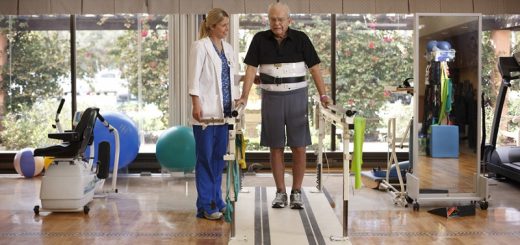
How to Travel Comfortably After Knee Replacement Using the Right Pillow
Knee replacement surgery is a major step toward a better quality of life. However, the recovery period requires careful planning — especially if you need to travel. Whether you are heading to a follow-up appointment or taking a trip to visit family, traveling with a healing knee can feel daunting.
The good news is that with the right preparation, it is entirely possible to travel safely and comfortably. One of the most important tools in your recovery toolkit is a good pillow. The right pillow can reduce swelling, ease discomfort, and keep your knee properly supported throughout your journey.
This article will walk you through everything you need to know. You will learn how to choose the right pillow, how to prepare for your trip, and how to manage your knee during travel. Let us start from the beginning.
Why Traveling After Knee Replacement Requires Special Care
After knee replacement surgery, your joint is in a delicate state. The surrounding muscles and tissues are still healing. Any prolonged sitting, poor positioning, or lack of support can cause pain and swelling. In some cases, it can even slow down your recovery.
Traveling adds extra stress to your body. You may be sitting for long hours in a car, plane, or train. Your movement becomes limited. Additionally, the vibrations from vehicles can irritate the knee joint. Therefore, every decision you make about how you sit, where you rest your leg, and what you bring with you matters a great deal.
Many people underestimate how much a simple pillow can help. A well-placed pillow lifts and cushions the knee, promotes circulation, and prevents the joint from stiffening. It is one of the simplest yet most effective tools for post surgery comfort during travel.
When Is It Safe to Travel After Knee Replacement?
This is one of the most common questions patients ask their doctors. The answer depends on several factors. These include your age, your overall health, the type of surgery you had, and how your recovery is progressing.
In general, most surgeons recommend waiting at least four to six weeks before taking a long trip. Short car rides of under an hour may be possible within the first two weeks, as long as you are not driving yourself and can keep your leg elevated.
However, every patient is different. Always consult your orthopedic surgeon before planning any travel. Your doctor can assess your healing progress and give you personalized advice. Never travel against medical advice, as doing so can put your recovery at serious risk.
If your doctor gives you the green light, the next step is to plan your trip carefully. This is where travel recovery tips become extremely valuable.
Choosing the Right Pillow for Your Knee
Not all pillows are created equal. When it comes to supporting a healing knee during travel, the shape, material, and firmness of your pillow all matter.
Types of Pillows That Work Best
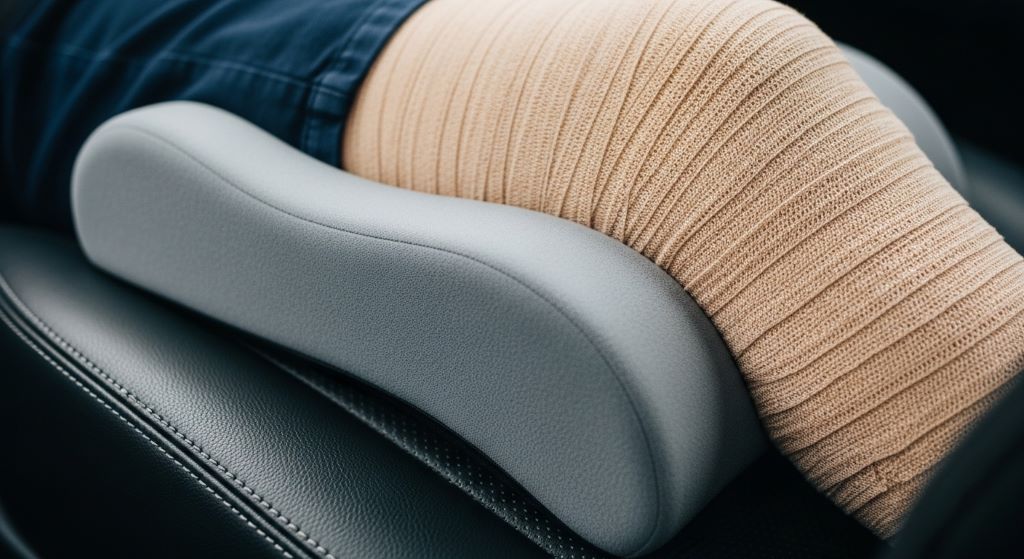
Wedge pillows are among the most recommended options for knee recovery. They are designed at an angle, which helps keep the knee elevated above heart level. This position reduces swelling and promotes healthy blood flow. A wedge pillow can be placed under your knee while seated or used as a leg rest on long journeys.
Contoured memory foam pillows are another excellent choice. They mold to the shape of your knee and provide firm but gentle support. Memory foam also absorbs pressure, which helps minimize discomfort during bumpy rides.
Knee bolster pillows are cylindrical in shape and are placed directly under the knee. They are easy to position and very portable. Many travelers prefer them because they fit easily into a bag or carry-on.
What to Look for When Buying a Travel Pillow for Knee Recovery
Keep these features in mind when choosing your pillow:
- Firmness: The pillow should be firm enough to hold its shape but not so hard that it digs into your skin.
- Size: It should fit comfortably in your seat space without pushing your knee into an awkward angle.
- Material: Memory foam and gel-infused foam tend to work best for joint support.
- Cover: Look for a removable, washable cover. Travel can get messy, and hygiene matters during recovery.
- Portability: A lightweight, compressible pillow is easier to carry through airports and train stations.
Additionally, some pillows come with straps that secure them in place. These can be very helpful when traveling on bumpy roads or shifting in your seat.
How to Position Your Knee During Travel
Pillow choice is just one part of the equation. How you position your knee is equally important.
When sitting, try to keep your knee at a gentle angle — not fully extended and not deeply bent. A fully extended leg can cause stiffness, while a deeply bent knee increases pressure on the joint. A slight bend of around 30 to 40 degrees is generally most comfortable.
Place your pillow under the knee, not directly under the heel. Supporting only the heel can strain the back of the knee. Instead, support the full length of the lower thigh and the upper portion of the calf. This keeps the entire joint in a neutral, relaxed position.
Furthermore, try to sit in an aisle seat when flying or taking a train. This gives you more room to adjust your leg and makes it easier to stand up and walk. Standing and moving briefly every 30 to 60 minutes is essential. It prevents blood clots, reduces stiffness, and keeps circulation healthy.
Preparing for Your Journey: A Step-by-Step Plan
Good preparation makes a huge difference. Here is how to get ready for travel after knee replacement.
Talk to Your Doctor First
As mentioned earlier, always get clearance from your surgeon. Ask specific questions about how long you can sit, whether you need compression stockings, and what warning signs to watch for during travel.
Pack Smart
Keep your essentials close and easy to access. You should not be bending or reaching awkwardly for items during the trip. Pack your knee pillow in your carry-on or place it within easy reach in the back seat of a car.
Bring any prescribed medications and take them on schedule. Pain and inflammation can increase during travel, so staying on top of your medication is one of the most practical travel recovery tips available.
Dress Comfortably
Wear loose, comfortable clothing that does not restrict blood flow. Avoid tight waistbands, narrow trouser legs, or anything that presses against the knee. Compression stockings, if recommended by your doctor, should be worn throughout the journey.
Comfortable shoes with good support are equally important. Swelling in the feet and ankles is common after knee surgery. Therefore, shoes that are slightly roomy will be more comfortable than a snug fit.
Plan for Extra Time
Everything takes longer during recovery. Allow extra time at the airport, train station, or wherever you are departing from. Request a wheelchair or assistance service in advance if needed. Most transportation hubs offer support for travelers with mobility needs, and there is absolutely no shame in using it.
Managing Discomfort During the Trip
Even with the best preparation, some discomfort is normal. Knowing how to manage it makes the journey much more bearable.
Apply ice or a cold pack to the knee if swelling increases. Many pharmacies sell reusable gel packs that stay cold for hours. Wrap them in a thin cloth before placing them on your knee to protect the skin.
Elevate your leg whenever possible. In a car, recline your seat slightly and prop your leg on the dashboard or a bag in the foot well. On a plane, use your pillow on top of your carry-on bag under the seat in front of you.
Gentle leg exercises during the trip also help. Ankle pumps — where you flex and point your foot repeatedly — improve circulation without straining the knee. Knee slides, where you gently bend and straighten the knee a small amount, can also reduce stiffness.
Additionally, staying hydrated is often overlooked but very important. Dehydration can increase inflammation and make discomfort worse. Drink water regularly throughout your journey and avoid excess alcohol or caffeine.
Arriving at Your Destination
Getting to your destination is just the beginning. Once you arrive, continue to prioritize post surgery comfort as you settle in.
Choose accommodation with easy access. A ground floor room or a hotel with an elevator is far more practical than stairs. Ask for a firm mattress, as soft beds can make it harder to get up and put extra strain on the knee.
Continue your physiotherapy exercises as prescribed, even while away from home. Missing sessions can cause setbacks. If your trip is longer, consider finding a local physical therapist who can continue your program.
Rest when you need to. Traveling is tiring under normal circumstances, and recovery makes it more so. Listen to your body. If your knee is telling you to slow down, listen to it.
Common Mistakes to Avoid
Many travelers make avoidable mistakes during post-surgery travel. Here are the most common ones:
- Sitting for too long without moving. Set a timer to remind yourself to stand and walk briefly.
- Forgetting the pillow at home. Always pack it the night before and double-check before leaving.
- Skipping medication because of travel disruptions. Keep your medications in your carry-on, not in checked luggage.
- Overdoing activity on arrival. Just because you feel good does not mean your knee is fully healed. Pace yourself.
- Ignoring warning signs. Redness, unusual swelling, warmth, or severe pain during travel should be addressed immediately. Call your doctor or seek medical attention right away.
Conclusion
Traveling after knee replacement surgery is possible, but it requires thoughtful planning. The right pillow is one of the most important tools you can bring with you. It keeps your knee elevated, supported, and comfortable throughout the journey.
Beyond the pillow, preparation is everything. Speak with your doctor before any trip. Pack carefully, dress comfortably, and give yourself plenty of time. Stay hydrated, move regularly, and listen to your body at every stage.
Following proven travel recovery tips and prioritizing post surgery comfort will make a significant difference in how you feel during and after your trip. With the right approach, you can travel safely and return home feeling well — not worse. Your recovery does not have to stop you from living your life. It simply asks you to be a little more thoughtful about how you do it.
Frequently Asked Questions
How soon after knee replacement surgery can I fly?
Most surgeons recommend waiting at least six weeks before taking a flight. However, this depends on your individual recovery progress. Always consult your orthopedic surgeon before booking any air travel. Blood clot risk is higher during long flights, so your doctor may prescribe preventive measures like compression stockings or blood thinners.
What type of pillow is best for traveling after knee surgery?
Wedge pillows and contoured memory foam pillows are the most commonly recommended options. They provide elevation and firm support, which helps reduce swelling and keeps the joint in a comfortable position. Look for one that is lightweight and portable enough to carry during travel.
Can I drive myself after knee replacement surgery?
In most cases, you should not drive yourself until your surgeon gives explicit approval. This typically takes at least four to six weeks, sometimes longer if the surgery was on your right knee. Reaction time and the ability to brake quickly must be fully restored before driving is safe.
How do I prevent blood clots during long trips after knee surgery?
Move your legs regularly by doing ankle pumps and short walks every 30 to 60 minutes. Wear compression stockings if recommended by your doctor. Stay well hydrated and avoid crossing your legs. Your doctor may also prescribe blood-thinning medication for longer journeys.
Should I bring a wheelchair or mobility aid when traveling after knee replacement?
It depends on how far along your recovery is. In the early weeks, a wheelchair or walking aid can reduce strain and help you navigate large airports or stations safely. Most transportation hubs offer assistance services — book these in advance to make your journey as smooth as possible.
Related Topics:
How to Relieve a Headache Fast Without Medicine