
How to Build a Daily Mindfulness Habit Fast
Most people want a calmer mind. Fewer distractions. Better sleep. Less stress.
But when they try mindfulness, they quit within days.
Not because mindfulness is difficult. Because they try to do it the wrong way.
They assume mindfulness means sitting still for 30 minutes. Clearing the mind. Becoming “good at meditation.” None of that is required.
A real mindfulness habit starts small, fits inside your day, and grows automatically with repetition.
This guide shows exactly how beginners can build a daily mindfulness habit from zero experience using simple, science-supported steps that work in real life.
What Is a Daily Mindfulness Habit and Why Does It Matter?
Snippet Answer (50 words): A daily mindfulness habit means intentionally paying attention to your thoughts, body, and environment for short periods each day. Even five minutes of consistent practice improves focus, reduces stress hormones, strengthens emotional regulation, and trains your brain to stay present instead of reacting automatically to distractions and anxiety.
Answer Block (48 words): A daily mindfulness habit is a short, repeated practice of observing thoughts, breathing, sensations, or surroundings without judgment. Done consistently, it strengthens attention control, lowers stress responses, improves emotional balance, and builds mental clarity even if sessions last only two to five minutes.
Mindfulness is not about stopping thoughts. It is about noticing them.
Your brain constantly switches between past worries and future planning. This drains energy and increases stress hormones like cortisol. A mindfulness habit interrupts that cycle.
Research shows consistent mindfulness practice improves:
- Attention stability
- Emotional regulation
- Sleep quality
- Stress recovery speed
- Decision clarity
Even beginners benefit within days if practice is consistent.
The key word is consistency. Duration matters less than repetition.
A two-minute daily session beats a 30-minute session once per week.
Think of mindfulness as mental strength training. Small reps build long-term resilience.
Why Do Most Beginners Fail to Stay Consistent With Mindfulness?
Answer Block (46 words): Beginners fail because they start with sessions that are too long, expect immediate calmness, misunderstand wandering thoughts as failure, and lack routine triggers. Without small starting steps and environmental cues, mindfulness feels difficult instead of automatic, reducing motivation within the first week.
Most people quit mindfulness for predictable reasons.
They expect silence in their minds. Instead, they notice more thoughts than ever. This feels like failure.
In reality, noticing thoughts means mindfulness is working.
Another mistake is copying advanced meditation routines. Sitting still for 20 minutes is not necessary for beginners.
The brain builds habits through friction reduction. If a task feels difficult, the brain avoids repeating it.
Common beginner mistakes include:
- Starting with long sessions
- Practicing without a fixed time
- Expecting instant calmness
- Judging wandering thoughts
- Skipping practice after one missed day
Consistency grows when practice feels easy to repeat.
That is why the best mindfulness habit starts small enough to feel effortless.
How Much Time Do You Need Each Day to Build a Mindfulness Habit?
Answer Block (45 words): Beginners only need two to five minutes daily to build a mindfulness habit. Short sessions activate attention control networks in the brain and improve stress regulation. Increasing session length gradually after two weeks strengthens habit stability without overwhelming motivation or mental resistance.
You do not need 20 minutes per day.
You need consistency.
Brain imaging studies show attention-training circuits strengthen through repetition, not session length. A five-minute practice repeated daily produces measurable improvements in emotional regulation.
Start with this structure:
- Week 1: 2 minutes daily
- Week 2: 3 minutes daily
- Week 3: 5 minutes daily
- Week 4+: 5–10 minutes daily
This gradual increase prevents mental resistance.
Your goal is identity change, not performance improvement.
When your brain starts believing “I practice mindfulness daily,” consistency becomes automatic.
What Is the Simplest Mindfulness Routine for Complete Beginners?
Answer Block (47 words): The simplest beginner routine is breath awareness for two minutes at the same time each day. Sit comfortably, notice inhaling and exhaling, and gently return attention when thoughts wander. This trains focus control without requiring silence, posture perfection, or meditation experience.
Breathing is the easiest anchor for attention.
You do not need equipment. You do not need silence. You do not need special posture.
Follow this beginner-friendly routine:
- Sit comfortably
- Set a 2-minute timer
- Notice breathing rhythm
- Observe thoughts without reacting
- Return attention to breathing
That is enough.
The brain improves attention through repetition of returning focus, not maintaining perfect focus.
Each time attention returns to breathing, neural pathways responsible for concentration strengthen.
Consistency transforms this simple routine into a stable daily habit.
When Is the Best Time of Day to Practice Mindfulness?
Answer Block (44 words): The best time to practice mindfulness is immediately after an existing daily routine such as waking up, brushing teeth, or finishing lunch. Linking mindfulness to a fixed habit creates automatic reminders and increases long-term consistency more effectively than choosing random practice times.
Timing determines habit survival.
The brain builds routines using triggers.
If mindfulness depends on memory alone, it disappears quickly. If it follows an existing habit, it becomes automatic.
Effective trigger examples include:
- After waking up
- After morning tea or coffee
- Before starting work
- After lunch
- Before sleeping
Morning sessions improve attention for the day.
Evening sessions improve sleep quality.
The best choice is whichever time you can repeat daily without interruption.
Which Types of Mindfulness Practices Work Best for Beginners?
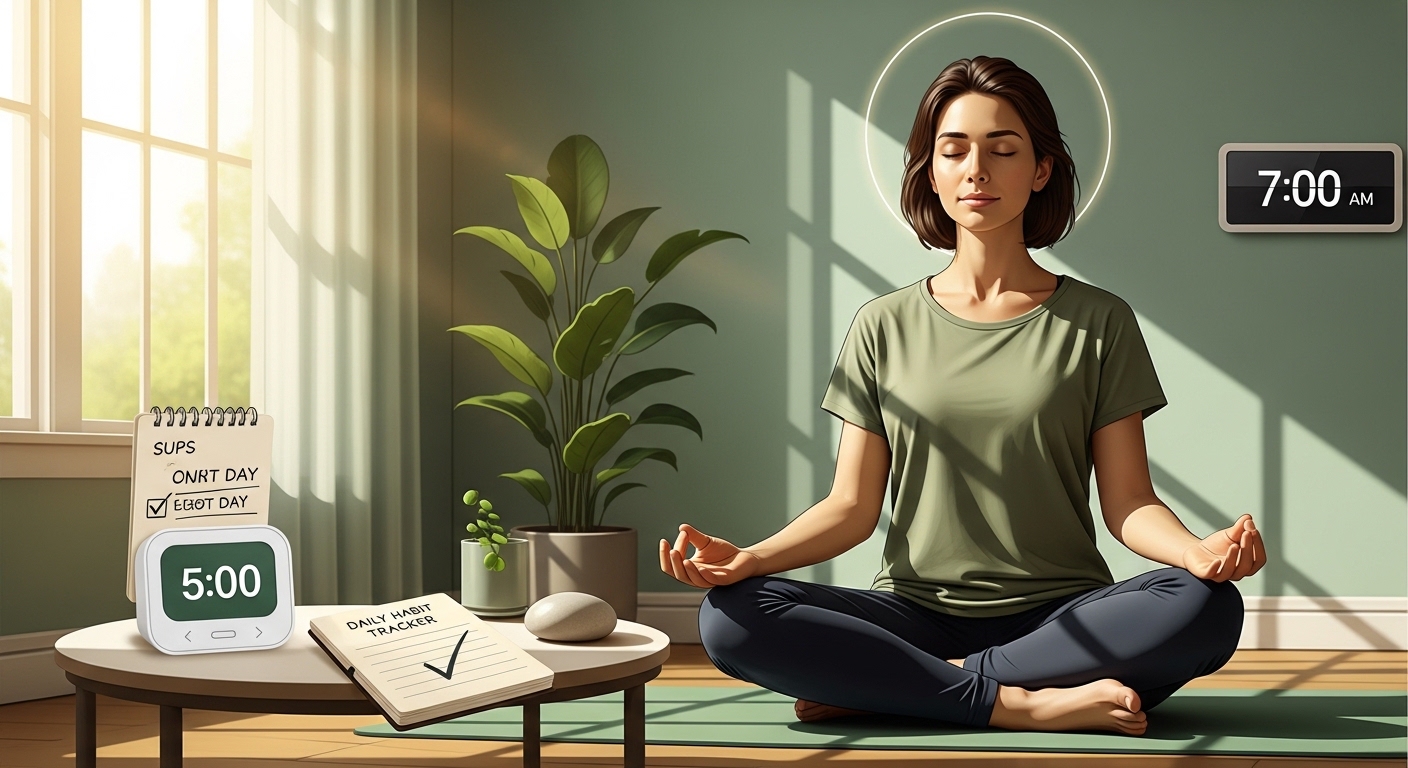
Answer Block (49 words): The most effective beginner mindfulness practices include breath awareness, body scanning, mindful walking, and sensory observation. These techniques require no experience and quickly train attention stability. Rotating between methods prevents boredom and increases long-term adherence to a consistent mindfulness routine.
Different techniques train awareness in different ways.
| Practice Type | Best For | Time Needed | Difficulty Level |
|---|---|---|---|
| Breath Awareness | Focus training | 2–5 minutes | Very easy |
| Body Scan | Stress reduction | 5–10 minutes | Easy |
| Mindful Walking | Active beginners | 5 minutes | Very easy |
| Sensory Observation | Overthinking control | 2–3 minutes | Very easy |
Beginners often succeed faster when rotating techniques.
This prevents boredom and increases curiosity.
Consistency improves when practice feels fresh rather than repetitive.
How Long Does It Take to See Results From Daily Mindfulness?
Answer Block (45 words): Most beginners notice improved focus and reduced stress within one to two weeks of daily mindfulness practice. Stronger emotional regulation, better sleep quality, and increased attention control typically develop within four to eight weeks when sessions remain short but consistent.
Mindfulness produces early and long-term changes.
Short-term benefits often include:
- Reduced mental clutter
- Lower stress intensity
- Improved concentration
- Better emotional awareness
Long-term benefits include:
- Stronger resilience under pressure
- Improved memory performance
- Better sleep patterns
- Reduced anxiety symptoms
Consistency determines speed of progress.
Even two minutes daily can create measurable improvements within weeks.
How Can You Stay Consistent With Mindfulness for Life?
Answer Block (47 words): Long-term mindfulness consistency depends on attaching practice to daily routines, keeping sessions short, tracking progress visually, and removing perfection expectations. Treating mindfulness as mental hygiene instead of performance training makes it sustainable and prevents motivation loss after missed sessions.
Consistency grows from simplicity.
Use these habit-building strategies:
- Practice at the same time daily
- Start with two minutes only
- Track streaks on a calendar
- Accept wandering thoughts
- Restart immediately after missed days
Mindfulness becomes permanent when it feels normal rather than difficult.
Your goal is identity change.
Once mindfulness becomes part of who you are, motivation is no longer required.
Conclusion: How to Make Mindfulness a Natural Part of Your Daily Routine
Most people believe mindfulness requires silence, discipline, and long meditation sessions.
It does not.
A daily mindfulness habit starts with two minutes of attention training linked to an existing routine.
Consistency matters more than duration. Simplicity matters more than technique.
When practiced daily, mindfulness improves focus, reduces stress, strengthens emotional control, and increases mental clarity within weeks.
The easiest way to begin is today.
Choose one trigger. Set a two-minute timer. Notice your breathing.
Repeat tomorrow.
If you follow that simple structure for the next seven days, mindfulness will stop feeling like a task and start feeling like a natural mental reset tool you can rely on anywhere.
Frequently Asked Questions
Can beginners practice mindfulness without meditation experience?
Yes. Mindfulness does not require meditation training. Beginners can start by observing breathing, walking slowly, or noticing surroundings for two minutes daily. These simple exercises train awareness effectively without needing posture control, silence, or advanced techniques.
Is mindfulness the same as meditation?
No. Meditation is a structured practice session, while mindfulness is moment-to-moment awareness during daily activities. Meditation builds mindfulness skills, but mindfulness can also be practiced while walking, eating, working, or breathing intentionally.
What happens if my mind keeps wandering?
Wandering thoughts are normal and expected. Each time attention returns to breathing or sensations, the brain strengthens focus control networks. The return itself is the training process, not a mistake or failure.
Can mindfulness reduce anxiety naturally?
Yes. Daily mindfulness lowers stress hormone activity and improves emotional regulation. Over time, this reduces anxiety intensity and improves recovery speed after stressful situations without requiring medication or long meditation sessions.
Should mindfulness be practiced in silence?
No. Silence helps but is not required. Mindfulness can be practiced in busy environments by focusing attention on breathing, body movement, or surrounding sounds without reacting to them.
How long should a beginner mindfulness session last?
Two to five minutes is enough for beginners. Short sessions repeated daily produce stronger habit formation than long sessions practiced inconsistently.
Can mindfulness improve sleep quality?
Yes. Practicing mindfulness before bedtime slows mental activity and reduces stress responses, helping the brain transition into deeper sleep cycles more efficiently.
Read More Also: Can You Cancel Health Insurance at Any Time?
Learn More: Do men experience hearing loss earlier than women?