
How to Reduce Leg Swelling Naturally Using Elevation Pillows
Swollen legs are more common than most people think. At the end of a long day, many people notice their ankles feel tight, their shoes fit differently, or their legs feel heavy and uncomfortable. This is not always a sign of something serious. However, it is a signal that your body needs attention.
The good news is that simple, non-invasive solutions exist. One of the most effective is leg elevation using a supportive pillow. This method has been used for decades by doctors, physical therapists, and nurses. It works with your body’s natural systems to ease discomfort and improve blood flow.
In this article, you will learn why leg swelling happens, how elevation pillows help, and how to use them properly. You will also find practical tips that make the process easier and more effective.
Why Legs Swell in the First Place
Before jumping into solutions, it helps to understand the cause. Leg swelling, also known as edema, occurs when fluid builds up in the tissues. This can happen for several reasons.
Sitting or standing for long periods is one of the most common triggers. When you stay in one position too long, blood and fluid can pool in the lower legs. Gravity makes this worse. The further fluid travels from the heart, the harder it is for the body to pull it back up.
Pregnancy also causes swelling, especially in the third trimester. The growing uterus puts pressure on veins that carry blood back to the heart. Additionally, hormonal changes during pregnancy cause the body to retain more water.
Certain medications can lead to swelling as a side effect. These include blood pressure drugs, steroids, and some antidepressants. If you notice swelling after starting a new medication, speak with your doctor.
Other causes include injuries, poor diet, excess salt intake, and underlying conditions like heart or kidney issues. Therefore, if your swelling is severe, persistent, or painful, always consult a medical professional before trying home remedies.
What Is an Elevation Pillow?
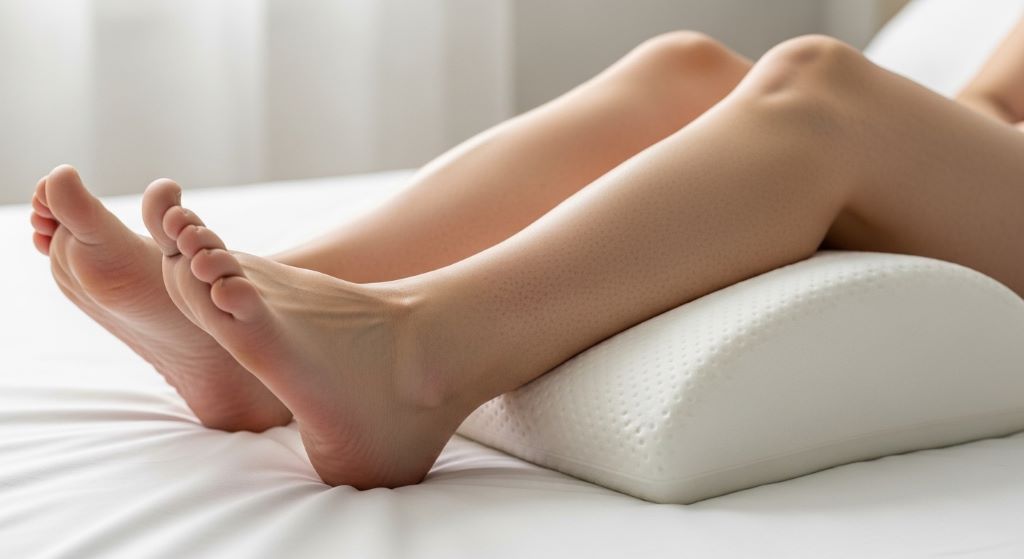
An elevation pillow is a specially shaped cushion designed to raise your legs above the level of your heart. Unlike a regular pillow, it is firmer and often wedge-shaped or contoured to support the full length of your legs comfortably.
Most elevation pillows are made from memory foam or high-density foam. They hold their shape well and do not collapse under the weight of your legs. Some models include a curved design that cradles the calves and keeps the knees slightly bent, which reduces pressure on the joints.
They come in a range of sizes and heights. A pillow that raises your legs to a 20 to 30-degree angle is generally considered effective for improving circulation. However, the ideal height may vary based on your specific condition and body type.
How Elevation Pillows Help Reduce Swelling
When you lie down and raise your legs above heart level, something important happens inside your body. Gravity, which normally works against your circulation, begins to work in your favor.
Blood and lymphatic fluid that have pooled in your lower legs start moving back toward the heart. The veins do not have to work as hard. The lymphatic system, which has no pump of its own, also benefits from the assistance gravity provides.
This process is a key part of natural circulation improvement. Over time, regular elevation reduces the pressure in leg veins. Less pressure means less fluid leaking into surrounding tissue. Less fluid in the tissue means less swelling.
Additionally, elevation reduces inflammation. When tissues are compressed by swollen fluid, they can become irritated and painful. Lifting the legs eases that compression and gives inflamed areas room to recover.
The Connection Between Circulation and Swelling
Good circulation is essential for healthy legs. When blood flows freely, it delivers oxygen and nutrients to tissues and carries waste products away. When circulation slows down, everything suffers.
Poor circulation does not only cause swelling. It can also lead to fatigue, skin discoloration, varicose veins, and in more serious cases, blood clots. Therefore, supporting circulation improvement is not just about comfort. It is also about long-term vascular health.
Elevation pillows support this by making venous return easier. Venous return is the process of blood traveling from the extremities back to the heart. It depends on muscle contractions, vein valves, and gravity. When you elevate your legs, you are essentially giving that system a boost.
Regular use of an elevation pillow, combined with other healthy habits, can meaningfully support your vascular health over time.
How to Use an Elevation Pillow Correctly
Using an elevation pillow sounds simple, and it is. However, a few key details make a big difference in how effective it is.
Start by lying on a flat surface, preferably a bed or a firm couch. Place the elevation pillow under your calves and heels, not just under your ankles. Supporting the full lower leg prevents awkward angles that can strain the knees or hips.
Your legs should be elevated so that your feet are above your heart. If you are unsure whether you have reached the right height, a useful guide is this: your toes should be roughly level with or slightly higher than your nose when you are lying flat.
Aim to stay in this position for at least 20 to 30 minutes at a time. Many people find the best results come from elevating their legs twice a day — once in the afternoon and once before bed. However, even one session per day is better than none.
Avoid crossing your legs while elevated. This can restrict blood flow and cancel out the benefits. Keep your legs parallel and relaxed. You can read, watch television, or simply rest during this time.
Best Times to Elevate Your Legs
Timing matters when it comes to leg elevation. Choosing the right moments in your day can amplify the results.
The end of the workday is one of the best times. If you have been sitting at a desk or standing on your feet for hours, fluid has likely accumulated by late afternoon. Elevating your legs at this time helps reset your circulation before the evening.
Before bed is another excellent time. Elevating your legs for 20 to 30 minutes before sleep helps reduce overnight swelling and may even improve your sleep quality. Swollen, uncomfortable legs can disrupt sleep patterns, so addressing the issue before lying down makes a real difference.
After exercise is also a good time, especially if your workout was intense. Elevation can help your legs recover faster by flushing out lactic acid and reducing post-workout inflammation.
Additionally, if you have been on a long flight or road trip, elevating your legs as soon as possible afterward is a smart move. Prolonged sitting in confined spaces is one of the most common causes of travel-related leg swelling.
Combining Elevation With Other Natural Strategies
An elevation pillow works best when it is part of a broader approach. There are several other methods that complement elevation and help you reduce swelling naturally without medication.
Hydration is one of the most overlooked tools. Drinking enough water each day helps the kidneys flush excess sodium from the body. Less sodium means less fluid retention. Aim for at least eight glasses of water daily, more if you are active or live in a hot climate.
Reducing salt in your diet is equally important. Sodium causes the body to hold on to water. Processed foods, canned goods, and fast food are all high in hidden sodium. Cooking fresh meals at home gives you control over how much salt you consume.
Gentle movement is also highly effective. Short walks, ankle circles, and calf raises all activate the muscles in your lower legs. These muscles act like pumps, pushing blood upward toward the heart. Even five minutes of movement every hour can make a noticeable difference for people who sit most of the day.
Compression socks are another popular complementary tool. They apply gentle pressure to the legs, which supports the veins and reduces fluid buildup. Many people wear them during the day and then elevate their legs in the evening for a well-rounded routine.
Cold and warm water therapy can also help. Alternating between cool and slightly warm water during a shower or foot bath stimulates blood vessel activity, which supports circulation improvement in the lower extremities.
Choosing the Right Elevation Pillow
Not all elevation pillows are the same. Choosing the right one depends on your needs, sleeping habits, and any existing health conditions.
Foam density matters. A pillow that is too soft will compress under the weight of your legs and lose its elevation height. Look for high-density memory foam or firm polyurethane foam. These materials hold their shape and provide consistent support.
The shape of the pillow also plays a role. Wedge pillows are simple and effective for general use. Contoured pillows with a curved surface better support the natural shape of the legs and may feel more comfortable during longer sessions.
Consider the height and angle carefully. A pillow that raises your legs to a 30-degree angle is a good starting point for most people. Those with more significant swelling or vein conditions may benefit from a steeper angle, but it is best to consult a healthcare provider before going too high.
Washable covers are a practical feature to look for. You will be using the pillow regularly, so keeping it clean is important. Many models come with removable, machine-washable covers. This small detail adds a lot of convenience over time.
Finally, think about size. If you plan to use the pillow in bed, make sure it fits comfortably alongside your regular bedding. Some models are designed for full-leg support, while others focus only on the calf and foot area.
When to See a Doctor
Elevation pillows are helpful, but they are not a cure for underlying medical conditions. There are times when swelling requires professional evaluation.
See a doctor if your swelling is sudden and unexplained. Rapid onset swelling, especially in one leg, can be a sign of a blood clot, which is a medical emergency. Do not wait to seek help in this situation.
Also seek medical advice if your swelling is accompanied by pain, redness, warmth, or skin changes like pitting. Pitting edema, where a pressed fingertip leaves a visible dent, often indicates a more serious fluid retention issue.
If you have a history of heart, liver, or kidney disease, speak with your doctor before starting any new routine. These conditions affect how the body manages fluid, and elevation may need to be combined with specific medical treatments.
Conclusion
Leg swelling is uncomfortable and disruptive, but it is also very manageable with the right approach. Elevation pillows offer a simple, affordable, and effective way to reduce swelling naturally without relying on medication. By working with gravity instead of against it, they encourage blood and lymphatic fluid to move back toward the heart, easing discomfort and supporting circulation improvement.
To get the most benefit, use your elevation pillow consistently, at least once or twice a day, for sessions of 20 to 30 minutes. Pair this habit with good hydration, a low-sodium diet, regular gentle movement, and compression socks for a well-rounded daily strategy.
Remember that while elevation is powerful, it works best as part of an overall healthy lifestyle. Listen to your body, stay consistent, and consult a healthcare provider whenever you have concerns about persistent or severe swelling. Small, steady habits lead to meaningful, lasting results.
Frequently Asked Questions
How long should I elevate my legs to reduce swelling?
Most experts recommend elevating your legs for 20 to 30 minutes per session. Doing this once or twice a day is generally enough to see results. Consistency over time matters more than the length of any single session.
Can I use a regular pillow instead of an elevation pillow?
A regular pillow can work in a pinch, but it is not ideal. Regular pillows tend to compress quickly under the weight of your legs, which reduces the elevation angle. A dedicated elevation pillow maintains its height and provides better, more consistent support.
Is elevating my legs safe during pregnancy?
Yes, elevating your legs during pregnancy is generally safe and often recommended. However, avoid lying flat on your back for extended periods, especially in the third trimester. Lying on your left side with legs elevated is typically the most comfortable and effective position.
How soon will I notice a difference after using an elevation pillow?
Many people notice a reduction in swelling after just one or two sessions. However, for lasting results, regular daily use over several weeks is recommended. Results vary depending on the cause and severity of swelling.
Can elevation pillows help with varicose veins?
Yes, elevating your legs can provide relief from the discomfort caused by varicose veins. It helps reduce pressure in the veins and eases the heavy, aching feeling. However, it does not treat the veins themselves. For varicose vein treatment, consult a vascular specialist.
Related Topics:
What To Do If Someone Is Choking
Types of yoga and its benefits